Wet Carpet Water Damage in Keller, TX
Wet carpet feels like a small problem. The pad underneath is the real issue. It holds water for days and grows mold. This page explains when to save carpet and when to let it go.
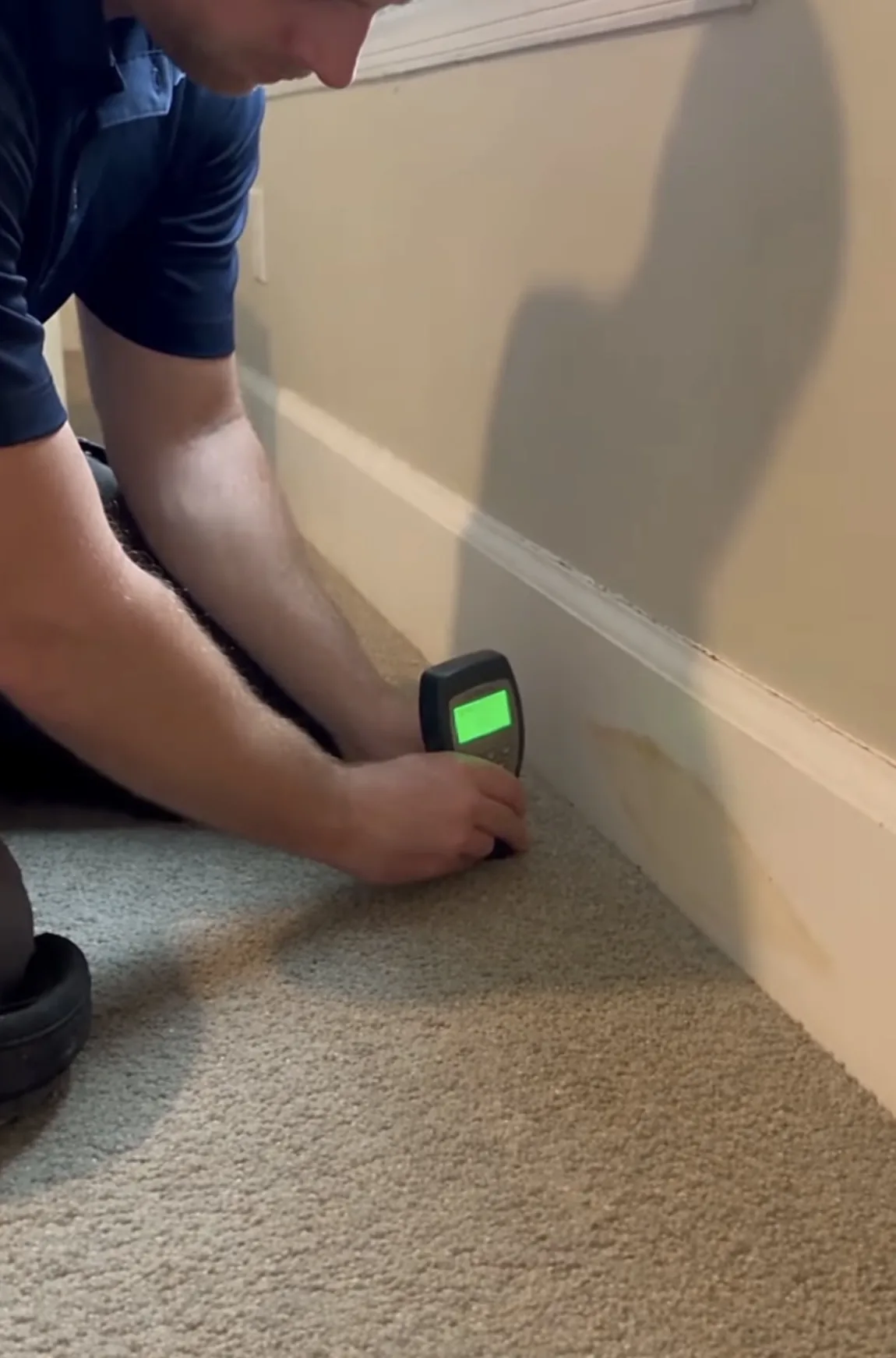
Signs to Look For
- Carpet squishes when you step
- Dark patches or a sour smell
- Carpet pulls up easily at the edges
- Wet baseboard or drywall above the carpet
What We Do
Extract the water
We pull water out of the carpet and pad with a weighted extractor.
Lift and prop the carpet
We peel carpet back from the tack strip and set air movers under it.
Replace the pad when needed
Carpet pad is cheap. Mold under a good carpet costs more. We often replace the pad and keep the carpet.
When carpet is a keeper
The water type and time decide. Clean water we remove within a day or two often leaves carpet safe to save.
Read more: IICRC S500 water damage standard
- Clean water, dried within 48 hours: carpet often stays.
- Gray water: we clean and treat, and may replace the pad.
- Black water: carpet and pad go.
- Old, thin carpet may cost more to dry than to replace.
What to Do Before We Arrive
- Lift furniture off wet carpet.
- Do not walk on wet carpet.
- Blot, do not rub.
- Keep kids and pets away if the water was not clean.
What changes the plan
Water type, time, and carpet age decide if we save or replace.
- Clean water within 48 hours: good chance to save
- Gray water: cleaning and pad replacement
- Black water: carpet and pad go
- Glued-down carpet over slab needs extra care
Why carpet pad matters
Pad is foam or rebond. It acts like a sponge. It can hold water for days and grow mold under the carpet.
Most clean-water jobs replace the pad and dry the carpet.
Carpet on slab
Carpet over a concrete slab can hide wet concrete. We check the slab with a meter. If the slab stays wet, we dry it before carpet goes back.
Odor after drying
A musty smell after drying means moisture remains or mold may have started. Call us for a reading. Do not mask the smell with sprays.
What affects time and price
Carpet type, pad, water type, and room size decide the plan. Clean water with fast action is the cheapest.
Why speed matters for carpet
Carpet fibers dry fast, but pad and slab dry slowly. The longer water sits, the more likely you replace the pad and risk mold.
After drying
We confirm pad and floor dryness before carpet goes back. Ask for a final reading.
How we dry carpet in place, step by step
First we take readings in the carpet, the pad, and the floor below. Then we pull the wet water out with a weighted extractor. This step removes more water than any fan can.
If the pad is clean and thin, we may keep it. If the pad holds a lot of water or looks old, we cut it in strips and haul it away. We then lift the carpet from the tack strip so air can reach the floor.
We also sort the carpet by backing and age. Newer synthetic carpet often handles water well. Old glued-down carpet can fail, and we tell you before we start.
Texas homes often have carpet on a slab. That floor stays cool and damp longer. We check it before we move on.
- We set air movers under the lifted carpet.
- We run dehumidifiers so the room air can take up moisture.
- We spray an antimicrobial on the floor and the back of the carpet when the water was not clean.
- We re-stretch the carpet and put it back on the strip after the floor is dry.
Carpet, stairs, and tight corners
Stairs and closets dry harder than open rooms. Air does not move well in tight spaces. We bring small air movers and tape off vents so airflow goes where the water is.
Wet carpet along a wall can also wick into the drywall above it. We check at least a foot up the wall, and often more. We cut a small flood cut only when the wall will not dry.
What you can do while you wait
You can help the job along with a few small moves. These keep the water damage from spreading. They also protect your belongings.
- Move furniture off wet carpet, or put foil or plastic tabs under the legs.
- Take up rugs and hang them to dry outside.
- Keep the AC on and set it a bit cooler.
- Keep pets and kids off the wet area.
- Use only a water-rated vacuum, never a standard shop vac.
Warning signs after the carpet looks dry
Dry to the touch does not mean dry underneath. Watch for ripples, a stiff feel, or a damp smell on humid days. Press a clean paper towel on the carpet and see if it picks up water.
If any sign shows up, call us. A quick reading costs less than a second round of repairs. Catch it early and the fix stays small.
Mark the date the carpet went wet. Note any smell, stain, or lift you see after. Those notes help us decide if a second visit is worth it.
Common Questions
How long does wet carpet take to dry?
With air movers and dehumidifiers, usually two to four days.
Can I dry carpet with box fans?
Fans help the top. They do not dry the pad or the floor under it.
Why does my carpet smell after drying?
Some moisture may remain, or mold may have started. Call us for a reading.
Is wet carpet pad worth saving?
Rarely. Pad is cheap and holds water. Most jobs replace it.
How do I know if the slab under the carpet is wet?
A moisture meter shows it. We check before we put anything back.
Related water damage help
Want to read first? See How Long Does It Take to Dry a House After Water Damage? and Is It Safe to Stay in Your Home After Water Damage?. We also work in North Fort Worth, Bear Creek area, Keller, and Watauga.
Call SureDry About wet carpet
Spotted this: carpet squishes when you step? Call us. We explain what happens next for your wet carpet problem.