Washing Machine and Dishwasher Leak Damage in Keller, TX
Old rubber hoses split without warning. A washer, dishwasher, or fridge line can leak for hours or days. The water often runs behind cabinets before you see it.
Signs to Look For
- Warped floor near the appliance
- Soft cabinet bases or swollen toe-kicks
- Musty smell in the laundry room or kitchen
- Water under the washer or dishwasher
What We Do
Turn off the supply
Close the valve behind the appliance or the main valve.
Pull out the appliance and extract
We move the unit and remove water from the floor and subfloor.
Dry under and behind cabinets
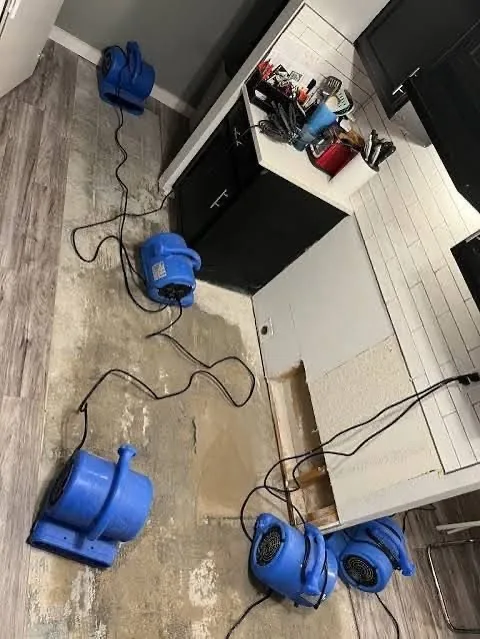
We take off toe-kicks and drill small holes so air reaches wet cabinet bases.
Small steps that prevent big leaks
Most appliance floods start with a cheap part. Rubber hoses fail after several years. Braided steel hoses last longer.
Read more: IICRC S500 water damage standard
- Replace rubber washer hoses every five years.
- Check dishwasher and fridge lines yearly.
- Use a drain pan under the washer.
- Install a leak sensor on the floor.
What to Do Before We Arrive
- Shut off the supply valve behind the appliance.
- Unplug the appliance if the cord is dry.
- Pull the appliance out if you can do it safely.
- Mop up pooled water.
What changes the plan
The type of appliance, the type of floor, and the run time set the scope.
- Washer leaks soak laundry room floors
- Dishwasher leaks soak cabinets and subfloor
- Fridge line leaks soak hardwood in kitchens
- Leaks behind walls take longer to find
Where appliance leaks go
A washer leak often runs under flooring. A dishwasher leak runs under cabinets. A fridge line leak runs behind the fridge and under hardwood. Each path hides water.
Quick checks each year
Pull the fridge out and look for stains. Look behind the washer for drips. Squeeze hoses and look for bulges. Replace any hose that looks worn.
Products that help
Braided steel hoses last longer than rubber. A drain pan under a washer on an upper floor adds safety. Leak sensors cost little and alert your phone.
What affects time and price
Leak time, floor type, and cabinet type matter most. A short washer leak on tile is simple. A slow dishwasher leak under hardwood and cabinets is bigger.
Insurance notes
Sudden hose failures are often covered. Slow leaks are often not. Keep the broken part if you can. Take photos.
Replace parts on a schedule
Replace rubber hoses every five years. Check your appliance manual for hose guidance. Put the date on the new hose.
The first ten minutes after you find a leak
Act fast but stay safe. Water and power do not mix, so think before you step into a wet kitchen or laundry room.
Shut off the supply valve first. Then unplug the appliance if the outlet is dry. If the outlet is wet, flip the breaker instead.
If the water reached the ceiling below, stay out of that room. Wet drywall can sag and drop. We will check it with a meter before anyone walks under it.
Do not run the appliance again until a plumber checks it. A second leak can undo the drying.
- Close the valve behind the washer or dishwasher.
- Soak up standing water with towels.
- Move rugs and boxes off the wet floor.
- Take photos before you clean up.
- Call us once the flow stops.
Dishwasher leaks hide under cabinets
A dishwasher leak runs along the floor and into the cabinet base. The toe-kick covers the damage. You may see nothing for weeks.
We pop the toe-kick and look inside. We check the floor under the dishwasher and the cabinets on both sides. We then dry the cavity with small air movers and drilled vent holes.
Look for a toe-kick that has lifted, swollen, or changed color. Sniff for a sour smell near the sink. Those small clues often point to a leak that has run for a while.
Washers and fridge lines
Washer hoses fail under constant pressure. A burst hose can put out a lot of water in a short time. If the washer sits on an upper floor, water drops through the ceiling below.
A fridge ice-maker line fails more slowly. It drips behind the unit for months. By the time you see a stain, the subfloor may be soft. We check the cabinet, the wall, and the floor edge.
Check the floor behind the fridge each spring. Look for dark stains, soft spots, or a rusty line fitting. Also test the washer shutoff valves. A valve that will not turn needs a plumber.
A slow leak can swell the cabinet base and lift the floor edge. Press on the toe-kick gently. Soft or crumbly board means water has sat there a while. Tell us what you find.
What to do with the broken part
Keep the burst hose or fitting. Put it in a bag and label it. Your insurer may want to see it, and a plumber can read the cause from it.
A new hose or line goes in before we start drying. That keeps the area safe from another water damage event while the equipment runs.
Take a photo of the appliance model and serial label. This gives your insurer the age and make. It also helps if a recall applies to the part that failed.
Common Questions
Does insurance cover a washing machine leak?
Insurers usually cover sudden hose failures. Slow leaks may not be.
Can water under a dishwasher damage the subfloor?
Yes. It can soak plywood and make it swell and weaken.
Do I need to remove my kitchen cabinets?
Rarely. We can dry most cabinet bases in place.
How do I find a slow appliance leak?
Check for soft flooring, stains under the unit, and musty smells.
Is a leak sensor worth buying?
Yes. Sensors cost little and warn you early.
Related water damage help
Want to read first? See What Should You Do When a Pipe Bursts in Your Keller Home? and Water Damage Insurance Claim Checklist for Texas Homeowners. We also work in Old Town Keller, Watauga, and Roanoke.
Call SureDry About appliance leaks
Spotted this: warped floor near the appliance? Call us. We explain what happens next for your appliance leaks problem.