Structural Drying in Keller, TX
A wet house can look dry and still hold water in walls and floors. Structural drying removes that hidden water. It is the step that stops mold and rot.
Signs to Look For
- Walls feel cool or damp days after a leak
- Baseboards or trim swell or warp
- Floors cup, buckle, or feel soft
- Windows fog or the air feels humid indoors
What We Do
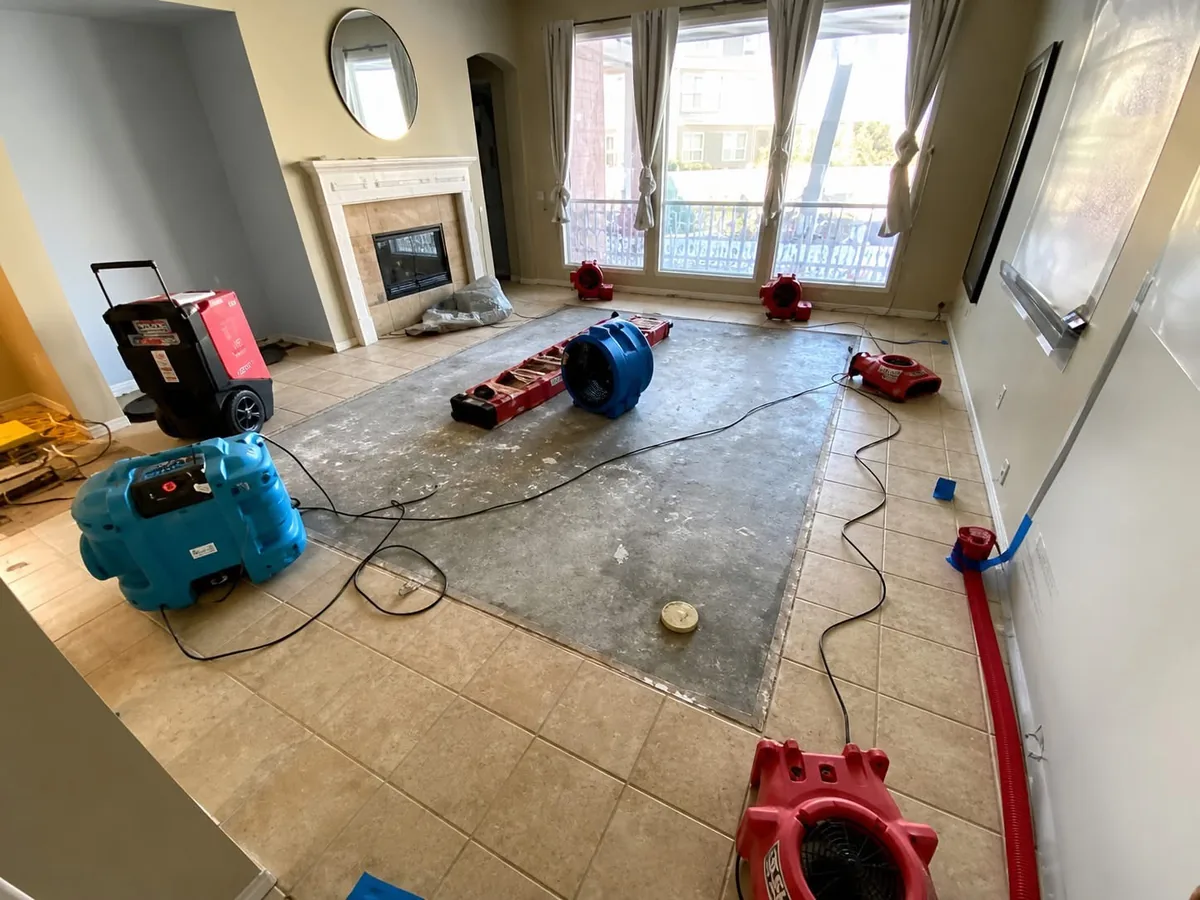
Air movers
These push air across wet surfaces. They speed up evaporation.
Dehumidifiers
LGR dehumidifiers pull water vapor out of the air. Without them, the moisture settles back into walls.
Moisture mapping and daily checks
We mark wet spots, then check them every day. Equipment moves as areas dry.
Dry goal vs. dry standard
IICRC S500 uses a dry standard. That is the reading of the same material in an unaffected part of your home. Our drying goal matches it.
Read more: IICRC S500 water damage standard
- Day 1: set equipment, take first readings.
- Day 2 to 3: check readings, move fans, remove stubborn wet spots.
- Day 3 to 5: confirm the goal and pull equipment.
- Thick walls and hardwood can need more time.
What to Do Before We Arrive
- Close windows and doors in wet rooms.
- Move small items out of the area.
- Set your AC to a normal setting.
- Plan for equipment noise and power use.
What changes the plan
Different materials dry at different speeds. We set equipment for each.
- Drywall dries faster than framing
- Hardwood and subfloor dry slowly
- Insulation holds water
- Humidity and indoor temperature change the pace
What the drying log shows
A drying log records each day's readings, equipment, and changes. It shows progress and ends with a final dry reading.
Your insurer may ask for it. We give you a copy.
Equipment types in plain words
Each tool has one job.
- Air movers: push air across wet surfaces
- LGR dehumidifiers: pull water out of the air at low humidity
- Desiccant dehumidifiers: dry cold or very wet spaces
- Drying mats: pull water from hardwood
- Injectidry systems: push dry air into wall cavities
Why we do not rush
Drying too fast can crack wood and plaster. Drying too slowly lets mold start. We set equipment for the material and watch the numbers.
What affects drying time
Humidity, air flow, material thickness, and how long water sat decide the timeline. Thick walls, wood floors, and slab can take longer than carpet or drywall.
What you can do during drying
Keep wet rooms closed. Do not unplug equipment. Keep your thermostat steady. Tell us if you smell mold or see new stains.
Why a dry check ends the job
The final dry check compares readings to your dry reference. It proves the materials reached the goal. It lowers the risk of mold and lets you rebuild with confidence.
The drying process day by day
Drying follows a simple rhythm. We set equipment on day one and return each day to check the numbers.
On day one, we measure and map the wet areas. We place air movers and dehumidifiers. On day two and three, we re-measure and move equipment as areas dry. Thick walls and wood floors may need more days.
On the final visit, we compare readings to the dry reference and remove everything.
The science in plain words
Drying works by moving water from materials into the air, then removing it from the air. Air movers push dry air across wet surfaces. Dehumidifiers pull water out of the air so it can take on more.
That is why we close doors and windows. Open windows let humid Texas air in and slow the process. The AC also helps, so keep it running unless we say otherwise.
ANSI/IICRC S500 is the standard that guides professional water damage drying. It sets out how to measure, monitor, and document the work.
What wet materials dry well
Not every material dries the same way. Some dry fast in place. Others hold water and need removal.
Solid wood framing, concrete, and tile usually dry well. Drywall may dry if it stays firm and clean. Pad, loose insulation, and soaked particle board rarely recover.
- Dries well: framing, concrete, tile, hardwood in some cases
- Dries sometimes: drywall, carpet, batt insulation
- Often removed: carpet pad, blown insulation, swollen particle board
Living at home during drying
Equipment makes noise and uses power. Expect a hum for several days. Our units run on normal outlets, and we plan circuits so we do not trip your breakers.
Your power bill will rise during the job. Ask your insurer if it covers that cost. Keep pets and kids away from the machines, and call us if a unit stops or alarms.
What if the readings stall?
Sometimes readings stop falling. We do not guess. We look for a hidden source. A slow drip, a wet wall plate, or a gap in the vapor path can all hold water in place.
We may open a small section of wall, add a hidden-cavity drying port, or change the airflow. We also check that the dehumidifier has room to breathe. Then we keep logging until the numbers fall again.
Common Questions
How long does structural drying take?
Most jobs take three to five days. Deep or old water damage can take longer.
Why are the machines so loud?
Air movers and dehumidifiers run hard to dry fast. The noise ends when the job does.
How do I know the house is dry?
We show you the final readings next to a dry reference. You can see the numbers.
Does drying raise my electric bill?
It does while equipment runs. We use only what the job needs.
Can I keep living in the house?
Usually yes. The machines are loud, but most families stay.
Related water damage help
Want to read first? See How Long Does It Take to Dry a House After Water Damage? and What Are the Signs of Hidden Water Damage in Your Home?. We also work in Westlake, Southlake, and North Richland Hills.
Call SureDry About structural drying
Spotted this: walls feel cool or damp days after a leak? Call us. We explain what happens next for your structural drying problem.