Ceiling Water Damage in Keller, TX
A wet ceiling is a warning. Water sits above the drywall and adds weight. A sagging ceiling can fall. Ceiling water damage in Keller usually comes from the roof, the attic, or an upstairs leak.
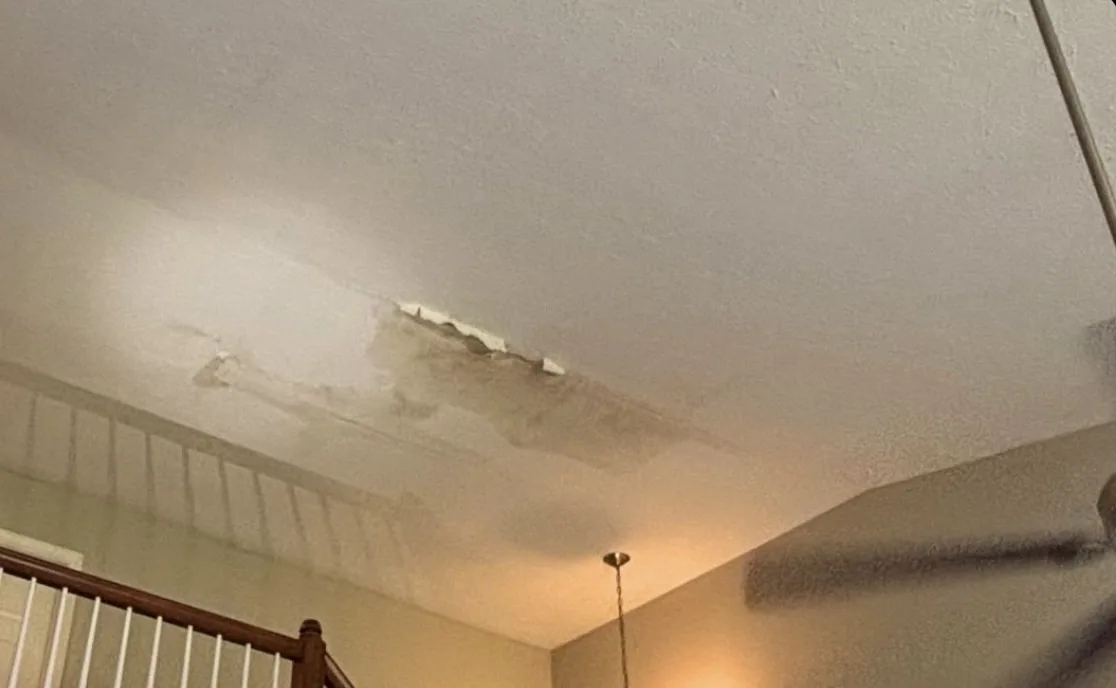
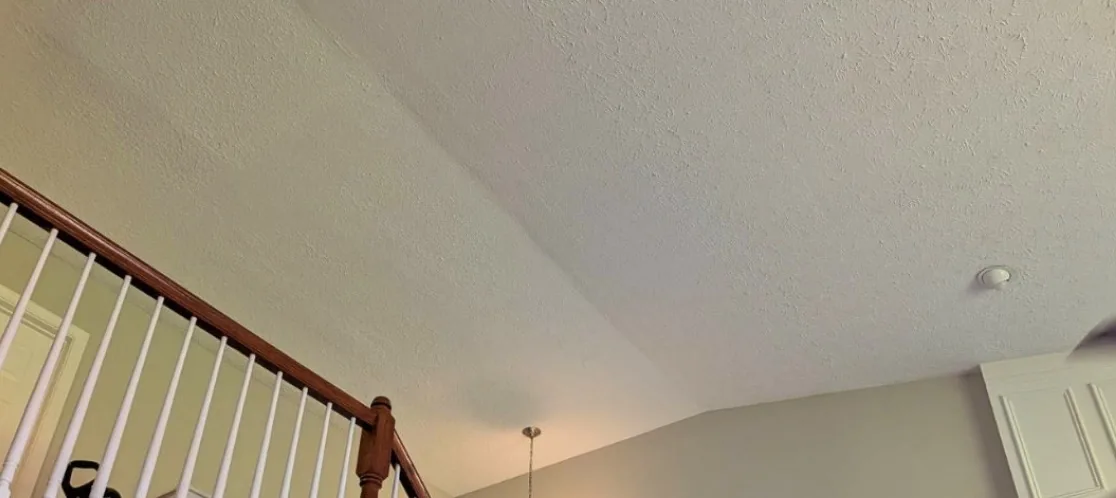
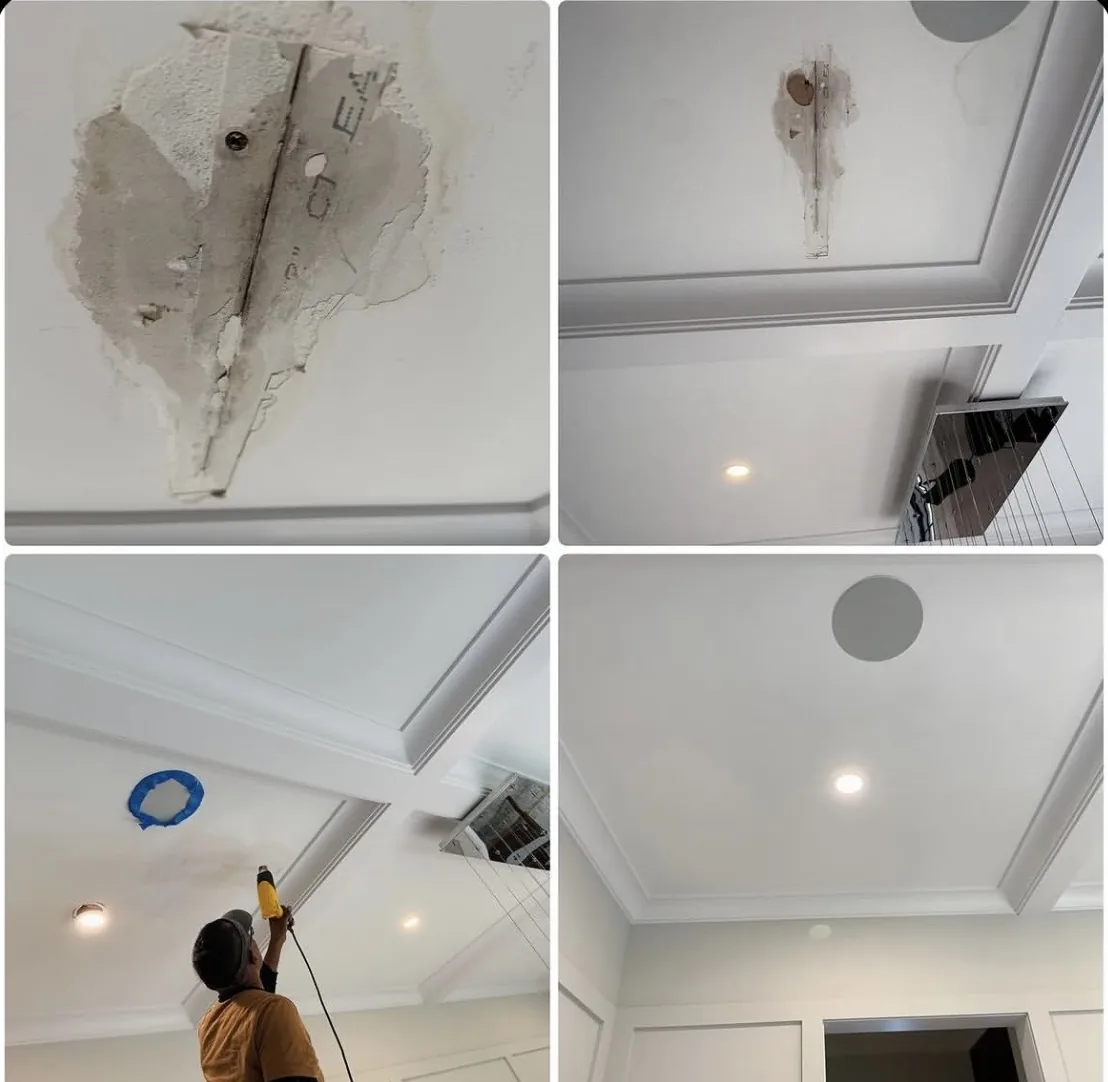
Signs to Look For
- Brown or yellow stain on the ceiling
- Ceiling bulges or sags
- Water drips from a light or vent
- Paint peels or drywall feels soft
What We Do
Make it safe
We poke a small hole in a bulging spot to drain trapped water. Then we move people and items away from it.
Remove wet drywall and insulation
Soaked drywall rarely dries well. We cut out the wet part and clean the cavity.
Dry the space above
We dry the attic or joist space. Then you can patch and repaint.
Find the source before you repair
A stain can sit far from the leak. Water runs along joists and drops somewhere else. Fixing the paint without fixing the source brings the stain back.
Read more: IICRC S500 water damage standard
- Upstairs bathroom: check the supply lines and the tub or shower.
- AC unit in the attic: check the drain pan and line.
- Roof: look for missing shingles after hail or wind.
- Plumbing in the attic: check joints and lines.
What to Do Before We Arrive
- Stay out from under a sagging ceiling.
- Place a bucket under drips.
- Move furniture away.
- Turn off the light fixture if water enters it.
What changes the plan
The source and the age of the stain change what we remove.
- Fresh stain with sound drywall may dry in place
- Sagging or soft drywall needs removal
- Insulation above wet ceilings often comes out
- Old stains may hide mold
What happens above the ceiling
Water above a ceiling soaks insulation first. The insulation holds water against the drywall. Over time, the drywall softens and sags.
We check the space above with a camera or by access hatch. We dry framing and clean the cavity.
Repair after drying
After drying, a drywall installer patches the hole. A painter matches the paint. Use stain-blocking primer on old stains. Skip this step until we confirm dry readings.
Safety rules
Do not stand under a bulge. Turn off lights near the wet area. Put a bucket under drips. If the ceiling hangs low, keep the room empty.
What affects repair time and price
Ceiling size, insulation, and water type decide the work. A small stain from a clean leak may dry in place. A large sag with wet insulation needs removal.
Common causes of ceiling leaks in Keller
Roof leaks after hail, upstairs bathroom leaks, AC drain overflow, and attic pipe leaks are the common causes. Find the source before you repair.
Signs the ceiling is not safe
A ceiling that bulges, sags, or drops water in a stream is unsafe. Keep people out of the room. Call us right away.
How to tell what caused the stain
The stain color and shape give clues. Look closely before you call.
A brown ring with a darker edge often means an old, repeated leak. A fresh yellow patch that spreads means active water. A line of stains along a seam may point to a pipe above. A stain near an exterior wall points to the roof.
- Directly below a bathroom: tub, shower, or toilet seal
- Below a hall closet or AC unit: drain line overflow
- Near an exterior wall: roof, flashing, or gutter
- In a line along the ceiling: supply pipe in the attic
What to do when the ceiling drips
Act in order. First, move people out from under the wet spot. Then move furniture and place a bucket or tub below the drip.
If the ceiling bulges, poke a small hole at the lowest point of the bulge. Stand to the side and use a screwdriver. This lets water drain into a bucket and may keep the whole panel from falling. Only do this if no one stands below and no light fixture sits nearby.
What we do in the room
We measure moisture in the ceiling, the walls, and the floor below. Water often runs down a wall and wets carpet or wood far from the stain.
We cut a small opening or remove the wet panel to reach the cavity above. We then dry the framing and remove wet insulation. Air movers and a dehumidifier finish the work.
Why the stain keeps coming back
If you paint over a stain without fixing the source, it returns. Stain-blocking primer only works on a dry ceiling.
Wait until the plumber or roofer confirms the leak has stopped. Wait until our readings show the ceiling is dry. Then repair and paint. This order saves you from paying for the same repair twice.
Textured ceilings and popcorn finish
Many Keller homes have knockdown or popcorn texture. Texture hides a stain at first, then peels as it dries.
Older popcorn ceilings may contain asbestos. If your home dates from before the 1980s, ask a lab to test a sample. Do this before anyone scrapes or cuts it. We pause that part of the work until the result comes back.
Common Questions
Is a sagging ceiling dangerous?
Yes. Wet drywall can fall without warning. Stay out from under it and call us.
Can I just paint over the stain?
No. Paint hides the stain but not the wet drywall or mold behind it.
Does insurance cover ceiling water damage?
Often yes, if the cause was sudden. Insurers may not cover a slow roof leak. Check your policy.
Can a stain come back after drying?
Yes, if the leak source stays active. Fix the source first.
How do I find an attic leak?
Check the roof, vents, plumbing, and AC drain line. A pro can trace it with a meter.
Related water damage help
Want to read first? See Can You Save Wet Drywall or a Wet Ceiling? and What Are the Signs of Hidden Water Damage in Your Home?. We also work in Old Town Keller, Colleyville, and Roanoke.
Call SureDry About ceiling damage
Spotted this: brown or yellow stain on the ceiling? Call us. We explain what happens next for your ceiling damage problem.